


Vocal exercises for speaking help you sound clearer, steadier, and more confident. They strengthen breath support, sharpen articulation, and improve projection so your voice carries without strain. Put a few of these drills into a short routine, and you’ll notice better control in meetings, presentations, and recorded videos.
Below is a practical set of instructions for training your voice for speaking, plus a simple warm-up you can run before any talk.
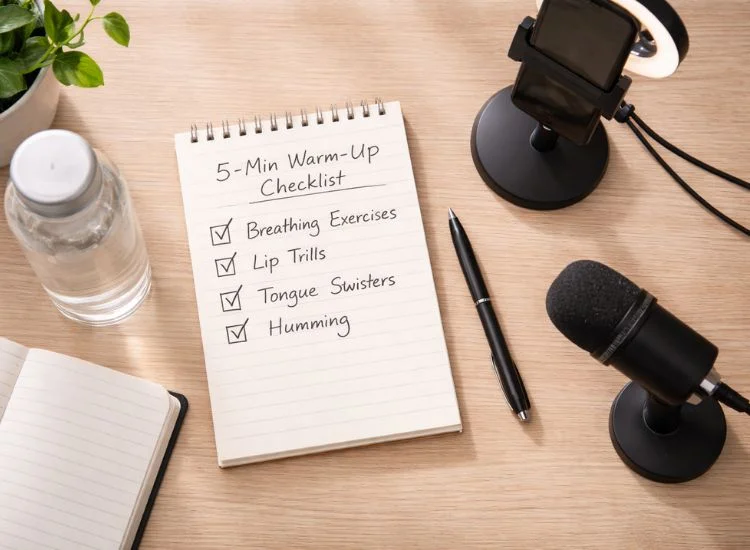
Use this before a meeting, live presentation, interview, or video recording.
If your voice feels tight, cut the intensity and slow down. Warm-ups should feel easy.
A strong message needs a delivery people can follow. When your voice sounds strained, flat, or rushed, your audience works harder to understand you. When your voice sounds supported and clear, people relax and stay with you.
A clear, confident voice can make the same words land very differently. Researchers often reference Albert Mehrabian’s work when discussing delivery, but his findings focused on how people interpret feelings and attitudes in specific situations, not every speaking scenario. The practical takeaway still applies: tone, pacing, and body language shape how your message is received.
Vocal exercises for speaking help you:
You don’t need a singer’s routine. You need a consistent speaking routine that builds breath support, articulation, resonance, and tone.
Before you practice vocal exercises for speaking, it helps to understand what’s doing the work.
The goal: steady airflow + relaxed throat + clear articulation.
Here’s a quick reference you can follow daily.

Breathing is the foundation of a strong speaking voice. Nervous speakers often switch to quick chest breaths, which makes the voice sound thin and unstable. Aim for lower, slower breathing that keeps airflow steady.
Goal: build breath support without tension
Time: 60–90 seconds
How to do it:
What you should feel: the belly moves more than the chest
Common mistake: lifting the shoulders or sucking in the stomach
Best for: calming nerves and stabilizing your tone
Goal: control how quickly you release air
Time: 60–90 seconds
How to do it:
What you should feel: a smooth, steady stream of air
Common mistake: speeding up at the end
Best for: longer sentences and confident pacing

A strong voice loses its impact if words come out muddled. Articulation involves shaping individual sounds clearly. Careless enunciation can reduce speech clarity, causing listeners to lose focus or misunderstand your message. Here are practical drills:
Goal: relax facial tension and warm airflow
Time: 30–45 seconds
How to do it:
What you should feel: loose lips, steady airflow
Common mistake: blowing too hard
Best for: quick warm-ups and tension reduction
Goal: sharpen consonants and improve precision
Time: 1–2 minutes
Try these:
How to do it:
Start slow, then increase pace while keeping crisp sounds.
What you should hear: clean consonants, stable pace
Common mistake: racing and slurring
Best for: meetings, interviews, and recorded scripts
Goal: improve mouth shaping for clearer words
Time: 60 seconds
How to do it:
What you should feel: more active mouth movement
Common mistake: barely moving the jaw
Best for: clearer speech on camera
Goal: increase precision in everyday phrases
Time: 60 seconds
How to do it:
What you should hear: sharper edges on words
Common mistake: clenching the jaw
Best for: professional speaking and voiceovers
If you’re preparing for recorded work, it helps to match your clarity work to the format you’re voicing, this quick guide to common voice over project types makes that easier.

Resonance gives your voice warmth. Projection helps your voice carry without strain. You don’t need to get louder. You need better support and placement.
Goal: build a fuller sound
Time: 60–90 seconds
How to do it:
What you should feel: buzzing vibration in the face
Common mistake: pushing volume
Best for: sounding richer and more present
Goal: move resonance into spoken words
Time: 60 seconds
How to do it:
What you should hear: a smooth transition into speech
Common mistake: collapsing the sound when the mouth opens
Best for: presentations and recorded videos
Goal: make projection feel effortless
Time: 30 seconds
Checklist:
Common mistake: lifting the chin to “project”
Best for: speaking to a room without strain
A monotone voice makes even smart ideas feel flat. Pitch and tone work together to keep listeners engaged and highlight meaning.
Goal: increase vocal flexibility
Time: 60 seconds
How to do it:
What you should feel: movement without tightness
Common mistake: forcing high notes
Best for: avoiding monotone delivery
Goal: express meaning with tone
Time: 2 minutes
How to do it:
Take this line: “I understand what you mean.”
Say it as:
What you should hear: clear emotional signals without exaggeration
Common mistake: overacting
Best for: leadership communication and storytelling
Goal: make key points stand out
Time: 60 seconds
How to do it:
Common mistake: emphasizing everything
Best for: persuasive speaking and teaching

A brief vocal routine can prime your voice for an upcoming speech, meeting, or class presentation. If you want structure and consistency, guided vocal warm-ups can help you move through these exercises efficiently.
Voice care tip: Drink water before you speak and keep a bottle nearby. Dry vocal folds often lead to a scratchy, breathy tone.
If you’re rehearsing a script for video, practice your first paragraph while reading at a natural pace. Tools like Teleprompter.com can help you rehearse consistently so your delivery stays calm on camera.
Coordinate a small gesture with an emphasized phrase. Keep it natural. This helps your delivery feel intentional and grounded.
A short pause before a key point often sounds more confident than speaking faster. Pauses also help you breathe.
Record a 30–60 second clip. Listen for:
Then pick one issue and fix it next time. Small improvements compound.
Consistency beats intensity when you want real improvement. Treat your routine as voice practice for speaking that you can repeat daily in five to ten minutes, so your voice stays clear and reliable for spontaneous calls, planned presentations, and scripted video sessions.
This covers the full stack: breath, clarity, resonance, tone.
If you want variety without spending time picking material, rotate short passages that fit your current goal and skill level. Using ready-to-read teleprompter practice scripts gives you something fresh to rehearse each day while you build consistency and increase difficulty over time.
Strong communication starts with a voice that sounds steady and clear. Vocal exercises for speaking shape how people hear your confidence and presence. With consistent work on breath support, articulation, and projection, your delivery feels easier to trust and easier to follow.
Start small. Run the 5-minute warm-up before your next meeting. Then follow the 10-minute routine for a week.
To track progress, record a short introduction today, practice daily for seven days, and record it again. If you want a simple way to rehearse your script while keeping your delivery natural on camera, you can sign up for free with Teleprompter.com and build a practice routine around your next talk or video.
The best vocal exercises for speaking clearly are diaphragmatic breathing, lip trills, humming, and tongue twisters. These drills improve breath support and articulation so your words sound sharper, steadier, and easier to understand in meetings, presentations, and video recordings.
Warm-up exercises for speaking include gentle neck and shoulder stretches, diaphragmatic breathing, humming, lip trills, and quick tongue twisters. A 5- to 10-minute warm-up increases vocal flexibility and resonance so you sound more energized and reduce strain.
Yes, vocal exercises are good for speaking because they train breath control, projection, and clarity. Consistent practice helps you sound more confident, speak longer without fatigue, and keep a steady tone during live talks, interviews, and scripted videos.
Improve your voice for public speaking by practicing a short daily routine that combines breathing drills, articulation exercises, and pitch variation. Record yourself weekly to spot rushed pacing or unclear words, then adjust your speed, emphasis, and breath timing.
Speak louder without strain by using diaphragmatic breath support and keeping your throat and jaw relaxed. Aim the sound forward with light resonance from humming, then practice reading lines at a steady pace while maintaining the same easy airflow.


.png)


.png)


